
For trees with no safe way down
Crane-Assisted Tree Removal in Buffalo, NY
When a tree stands over two roofs with no open ground, a crane lifts each piece up and away instead of lowering it.
- Free estimates, in person, for homes in Buffalo and Erie County
- Line-item quote you can compare
- Wood, brush and stump plan settled up front
When a Crane Is the Safest Choice
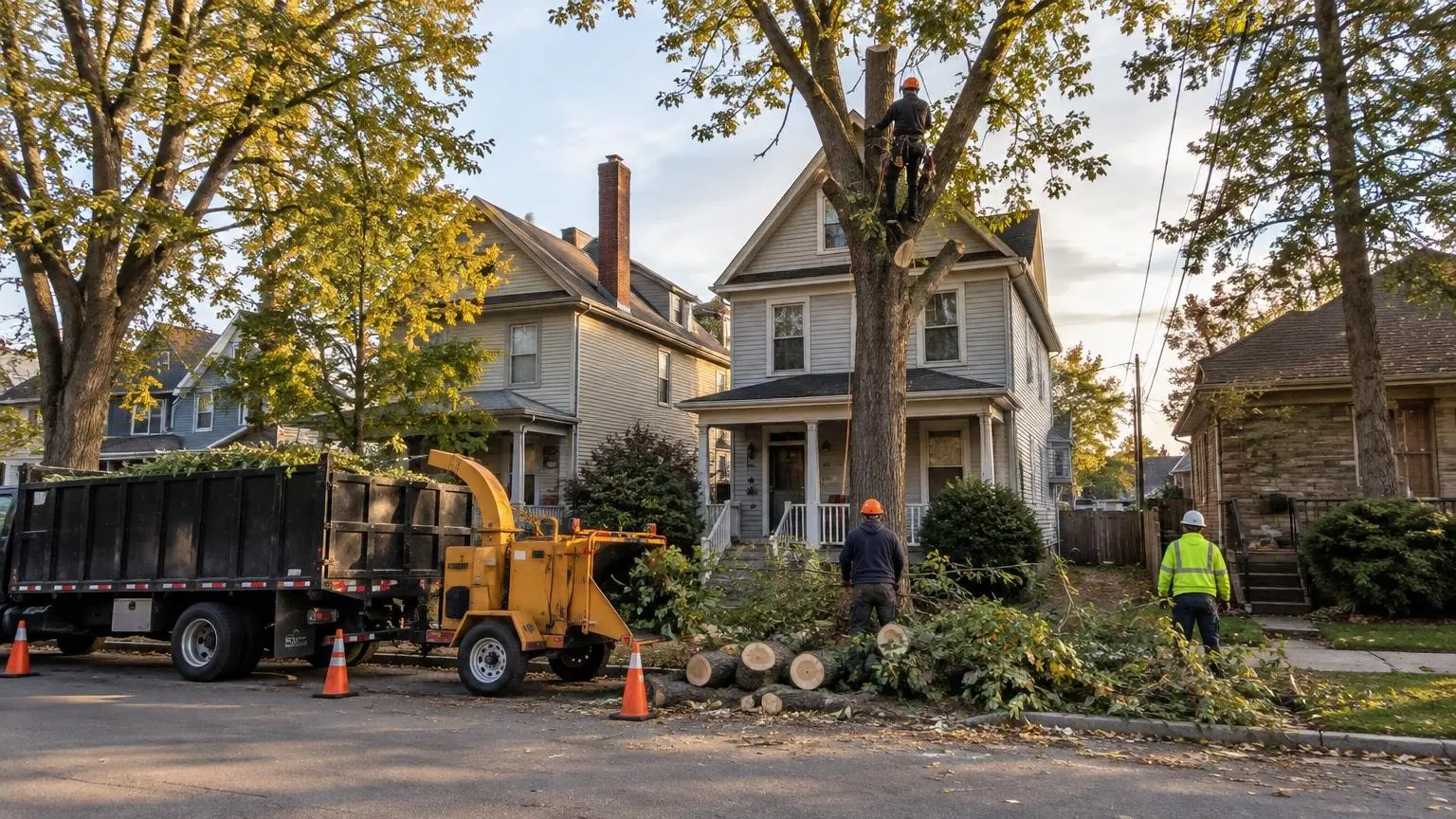
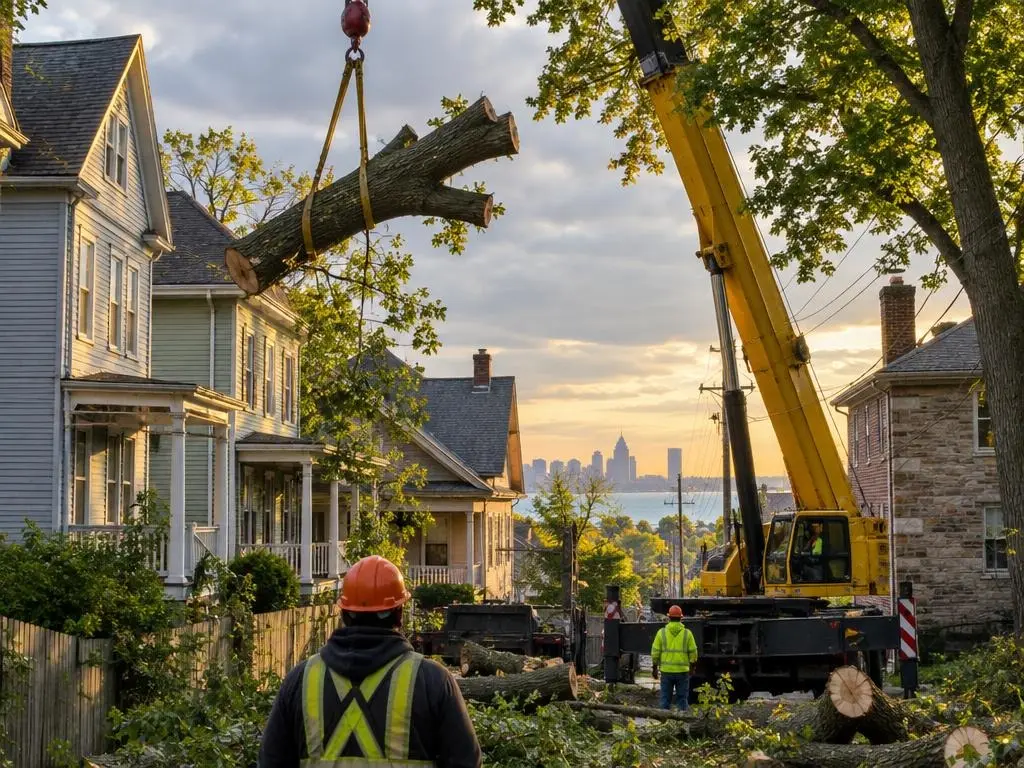
Crane-assisted tree removal is a way of taking a tree down by lifting it apart. Instead of cutting a limb and lowering it on a rope to the ground beside the trunk, the crew attaches each section to a crane line, makes the cut, and the crane swings the piece over the house and sets it down in the street or driveway. On many Buffalo lots, where a back yard can be reached only through a shared driveway or a gap between houses a few feet wide, that is the difference between a tree that can be removed safely and one that cannot.
Trees that call for a crane
Not every big tree needs one. A crane makes sense when a tree leans over a house or garage with no open ground below, when the wood is too dead or decayed to hold a climber or rigging, as with many ash killed by the borer, or when a storm has left a trunk resting on a roof. It also helps when a tree is so large that lowering its limbs on ropes would put heavy loads on a house, fence or the neighbor's porch on the way down.
What the day looks like
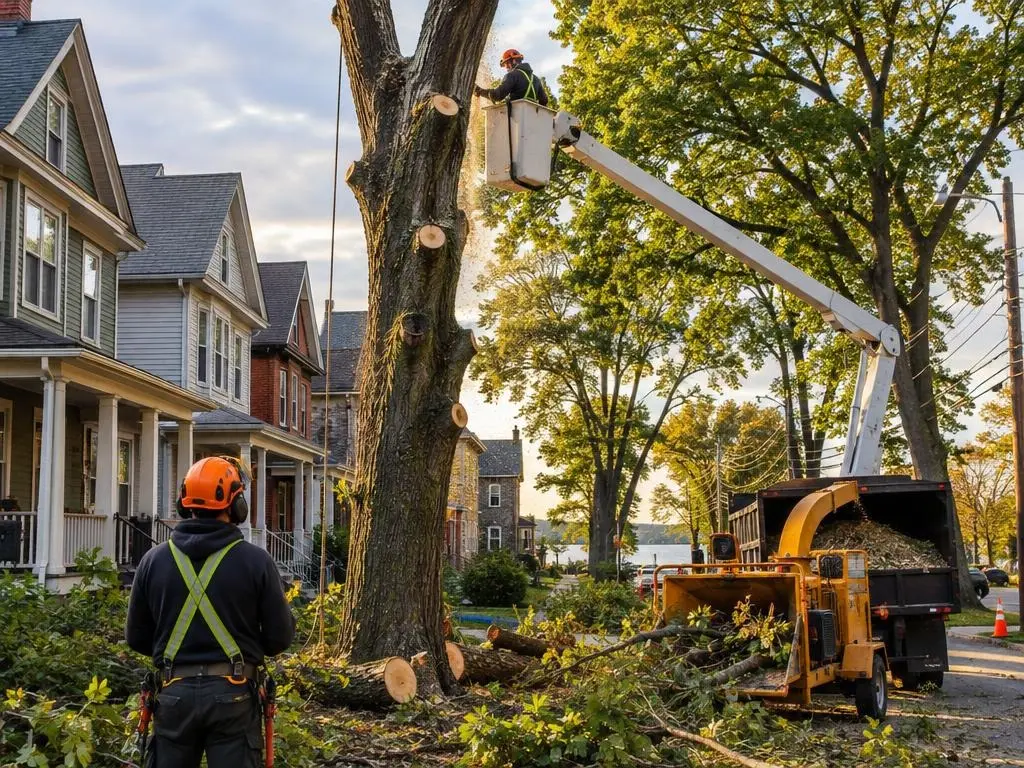
The crane is set up as close to the tree as its reach allows, usually on the street or a driveway, with pads under its outriggers. If it has to stand in the street, the city may require a permit for using the right-of-way, and we check that before the job is scheduled. A climber or a lift puts the crew at the right height, and each pick is sized so its weight is within what the crane can lift at that distance; heavy wood such as oak and wet maple is cut in smaller pieces. A ground crew signals the operator, lands each piece and feeds brush into a chipper while logs are cut up.
Cost and trade-offs
A crane adds a real cost, but it often shortens a job from days to hours and keeps the most risk away from the house and the people working. For a tree directly over a home, the crane is usually the cheaper choice once you count the time and the risk of damage. The written quote lays out the crane's cost so you can see it.
Protecting what is underneath
Because pieces travel through the air rather than down the trunk, very little lands on gardens, roofs or wires. Mats or plywood go down where the crane and trucks touch the lawn or driveway.
When We Use a Crane
A crane is planned in when it is the safest and most sensible way to get the tree out.
Trees over houses and garages
Large crowns hanging over roofs with no clear ground below, lifted out piece by piece.
Dead and brittle trees
Dead ash and decayed trees whose wood cannot hold a climber or lowering ropes.
Backyard trees with no access
Trees behind houses on narrow city lots, where a lift or trucks cannot get past the house.
Storm-loaded trees
Trunks resting on roofs or wedged against other trees, held by the crane before any cut is made.
Crane-Assisted Tree Removal Price Ranges
| Job | Published range |
|---|---|
| Crane rental, per day (Angi, national) | about $250 to $600 |
| Difficult removal with crane, total (Angi, national) | up to $6,000 to $7,000 |
| Tree 60 to 80 ft, removal only (HomeGuide, national) | $850 to $2,000 |
| Tree over 80 ft (HomeGuide, national) | $1,200 to $2,500 and up |
| Hard-to-reach or unsafe site (Angi) | 25% to 50% added |
Ranges from Angi (2026) and HomeGuide (2026). Crane size, setup time, street permits, the tree's weight and how far the crane must reach all affect cost. Your written estimate is the price.
How a Crane Removal Works
1. Site visit and measurements
We look at the tree, the reach from the street or driveway to the trunk, overhead wires and where the crane can safely stand.
2. Plan the picks
The quote states the crane, the order the tree comes apart, and any street permit or parking arrangements.
3. Set up and protect
Crane positioned on pads, mats laid on lawns and drives, and the work area closed off.
4. Lift the tree out
Each section is attached, cut and flown to the landing area, then chipped or cut up.
5. Cleanup
Wood and brush removed or left as agreed, and the yard and street cleaned.
Crane-Assisted Tree Removal Questions
How do I know if my tree needs a crane?
If the tree leans over a house with no open ground, is dead and brittle, or stands in a back yard you cannot reach with equipment, a crane is likely. We say so at the estimate and explain why.
Will a crane damage my driveway or lawn?
The crane sits on pads to spread its weight, and mats go down where it and the trucks travel. Soft spring lawns and thin, old driveways get extra protection, and we discuss the setup spot with you first.
Do I need to tell my neighbors?
It helps. The crane may block part of the street for a few hours, and pieces may pass over a neighbor's yard. We can work around their cars and schedules if they know ahead of time.
Is a crane removal more expensive?
The crane adds cost, but it can shorten the job and lower the risk to your house. For trees directly over a roof, the total is often close to a long rigging job, and the quote shows the crane cost on its own line.
Crane-Assisted Tree Removal Service Areas
- Tree Removal in Buffalo, NY
- Tree Removal in Amherst, NY
- Tree Removal in Cheektowaga, NY
- Tree Removal in Tonawanda, NY
- Tree Removal in Kenmore, NY
- Tree Removal in West Seneca, NY
- Tree Removal in Lackawanna, NY
- Tree Removal in Hamburg, NY
- Tree Removal in Orchard Park, NY
- Tree Removal in Lancaster, NY
- Tree Removal in Depew, NY
- Tree Removal in Clarence, NY
- Tree Removal in Williamsville, NY
- Tree Removal in Grand Island, NY
- Tree Removal in East Aurora, NY
- Tree Removal in North Tonawanda, NY
- Tree Removal in Niagara Falls, NY
- Tree Removal in Lockport, NY
- Tree Removal in Lewiston, NY
- Tree Removal in Wheatfield, NY
- Tree Removal in Elma, NY
- Tree Removal in Blasdell, NY
- Tree Removal in Alden, NY
- Tree Removal in Evans, NY
Get a Crane-Assisted Tree Removal Estimate
Free estimates for large and hard-to-reach trees in Buffalo and Erie County.