
After snow, ice and wind
Emergency Storm Tree Removal in Buffalo, NY
When a limb is on the roof or a trunk is across the driveway, the job is getting the weight off safely without making the damage worse.
- Free estimates, in person, for homes in Buffalo and Erie County
- Line-item quote you can compare
- Wood, brush and stump plan settled up front
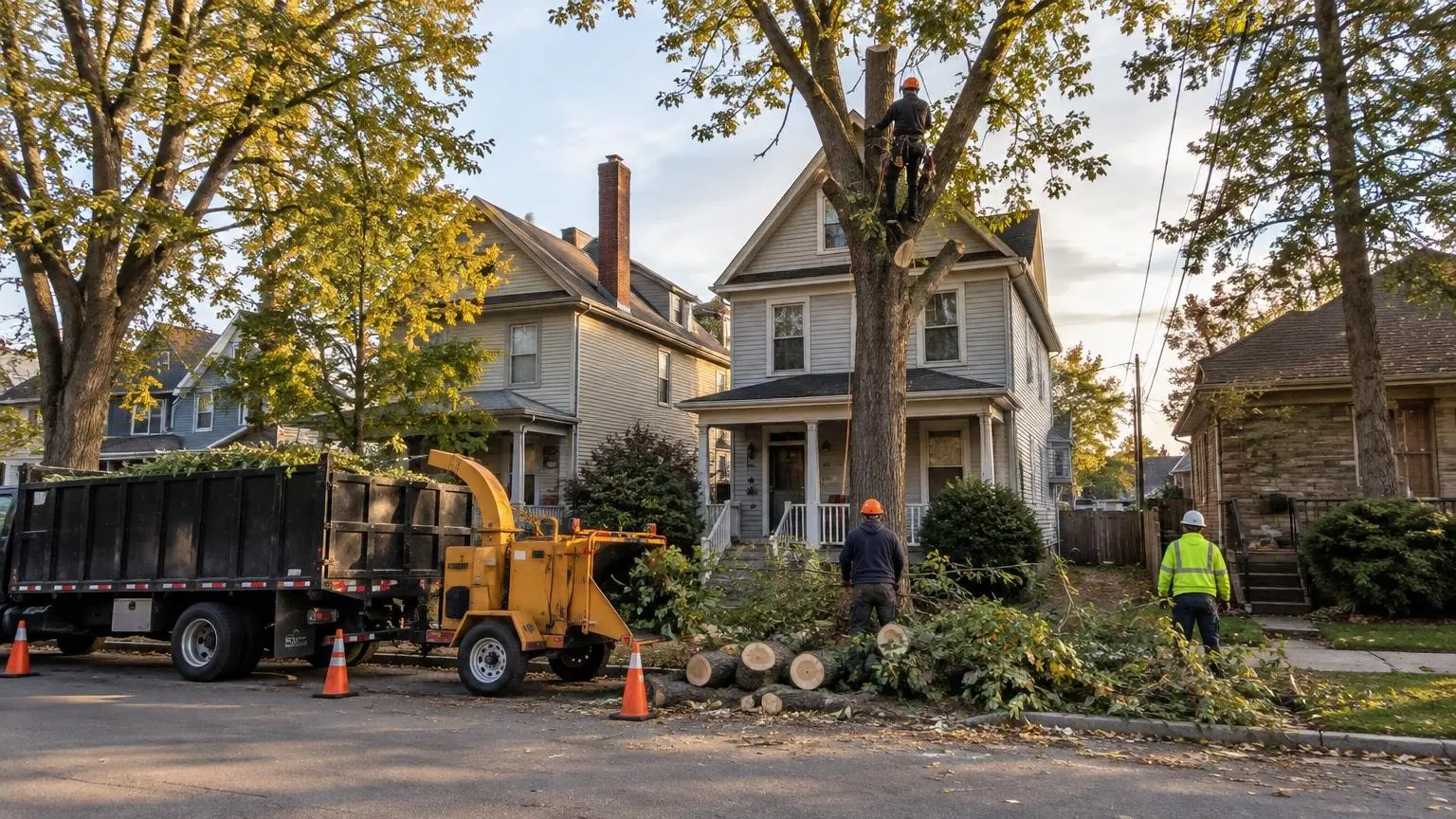
When the Storm Has Already Done the Damage
Emergency storm tree removal in the Buffalo area follows the weather off Lake Erie. Some of the worst tree damage here has come from snow, not wind: the October 2006 storm dropped more than 22 inches of wet snow on trees still in full leaf, and limbs broke across the whole city in one night. The National Weather Service's records for Western New York also show leafed-out trees losing limbs to early lake-effect snow in other Novembers, and windstorms have pushed gusts past 60 mph here more than once. A tree that fails in one of those storms usually lands on something, and lifting it off is very different from cutting down a standing tree.
What to do before anyone arrives
Get people out of the rooms under the tree and away from the yard. Treat every wire on the ground or in the branches as live, even if the lights are out, and report downed lines to 911 or National Grid. If it is safe to do so from a distance, take photos of the tree, the roof and anything it hit before anything is moved; your insurer will want them. Do not try to cut a trunk that is resting on a roof or bent under tension, because the wood can spring or shift in ways that are hard to predict.
Why storm trees are dangerous to cut
A tree lying on a house is loaded in ways a standing tree is not. Parts of the trunk are in compression and others in tension, broken limbs called hangers may be caught high in the crown, and the roof itself may be holding part of the weight. Removing the tree means taking that load off in an order that keeps it from rolling, dropping or tearing further into the structure. Often the trunk is supported by rigging from another tree or lifted by a crane before the first cut is made.
How we sort storm calls
After a big storm the calls come in faster than anyone can answer them. You can call (716) 475-9224 at any hour to leave your address and what happened, and we schedule in order of danger: trees on occupied houses, trees blocking the only exit, and trees leaning on wires first, then trees on garages and cars, then trees across yards and driveways. We will tell you honestly when we can get there.
Damage that shows up later
Not all storm damage is on the ground. A limb that split but did not fall, a crack that opened at a fork, or a tree that now leans a few degrees more than it did are all worth a look in the days after a storm, before the next snow load finds the weak spot.
Storm Work We Handle
Each storm job starts with making the site safe and ends with the wood off your property.
Trees on roofs and structures
Lifting or lowering the weight off a house, garage or porch in sections, with rigging or a crane, so the structure is not damaged further.
Hanging and split limbs
Taking down broken limbs caught in the crown and splits that did not fall, before they drop on someone.
Uprooted and leaning trees
Removing trees that tipped when soaked ground let go, including those leaning on a neighbor's tree or house.
Blocked driveways and fallen trunks
Cutting and clearing trunks and limbs across driveways, walks and yards so you can get in and out again.
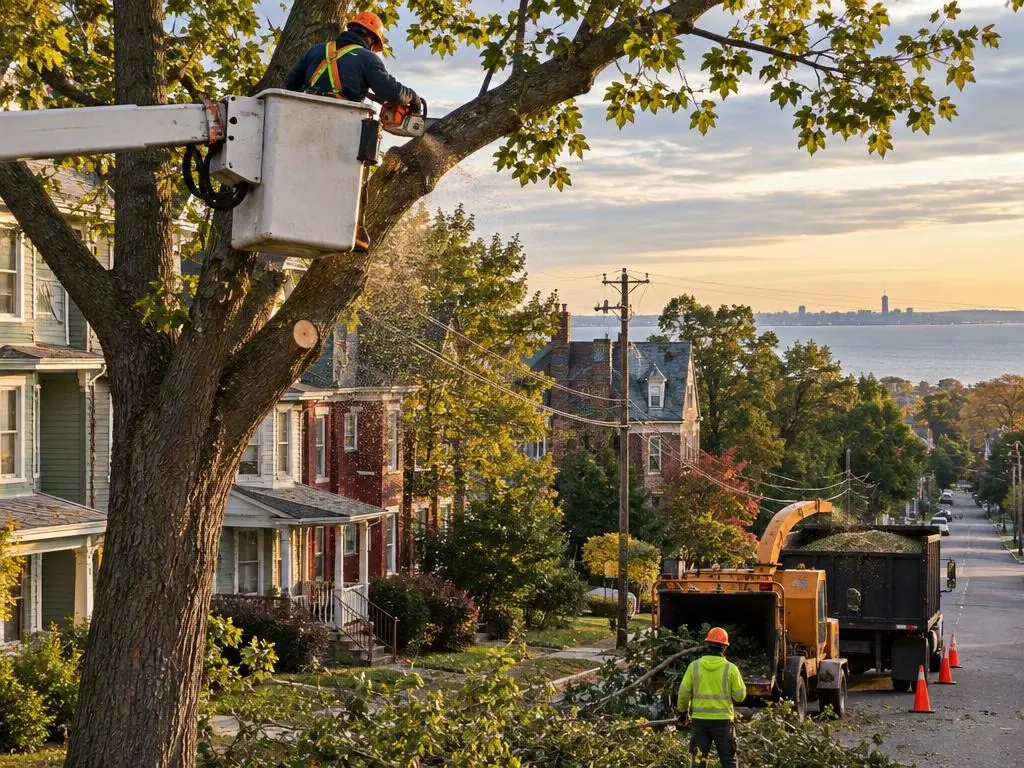
Emergency Storm Tree Removal Price Ranges
| Job | Published range |
|---|---|
| Emergency tree removal, Buffalo average (This Old House) | about $2,202 |
| Emergency removal, national upper end (Angi) | up to $5,000 |
| Same-day or next-day service (HomeGuide) | 2 to 3 times the standard rate |
| Crane-assisted difficult removal (Angi) | up to $6,000 to $7,000 |
| Hard-to-reach or unsafe site (Angi) | 25% to 50% added |
Ranges from This Old House (2026), Angi (2026) and HomeGuide (2026). Storm prices depend on what the tree is resting on, how it is loaded and whether a crane is needed. Homeowners insurance may pay part of the cost when a covered storm drops a tree on a structure. Your written estimate is the price.
How Storm Work Works
1. Leave the details
Call (716) 475-9224 with your address, what fell, what it hit and whether any wires are involved. Photos sent by text or the form help.
2. Make the site safe
We confirm wires are de-energized or cleared by the utility, then assess how the tree is loaded.
3. Written price before cutting
Even in an emergency, you get the price for the work in writing before it starts.
4. Take the weight off
The tree is rigged or lifted and taken off the structure piece by piece in a controlled order.
5. Clear and document
Wood and brush hauled or left as you choose, and an itemized invoice you can give your insurer.
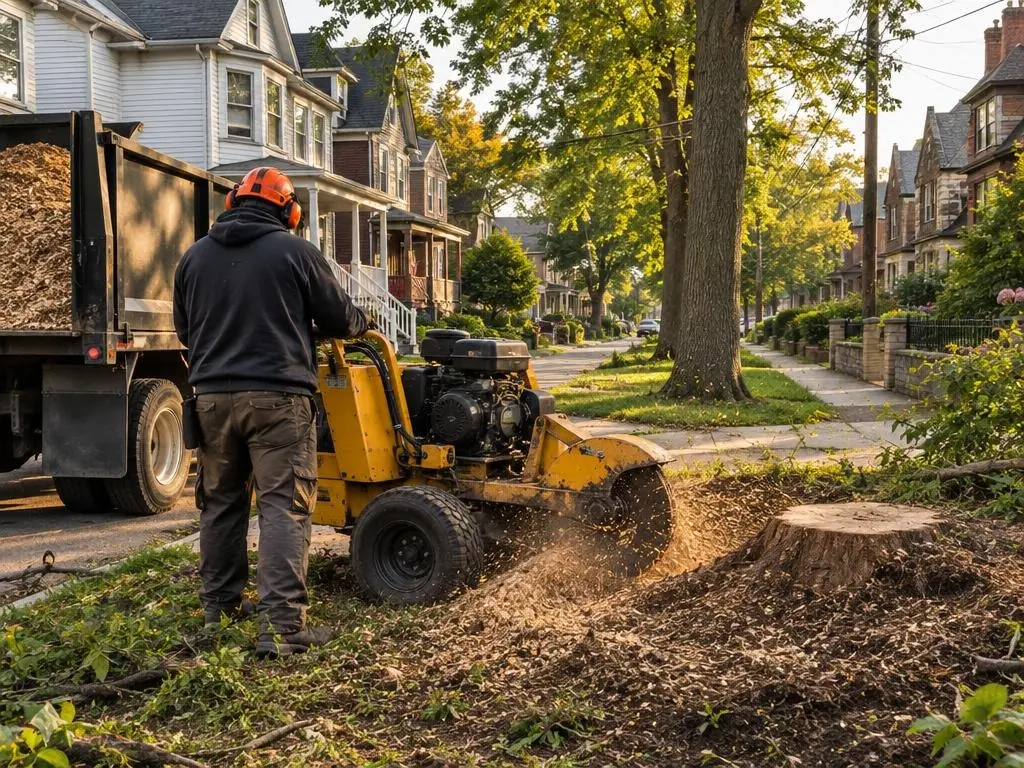
Emergency Storm Tree Removal Questions
Should I call my insurance company or a tree company first?
Make everyone safe and report downed wires first, then photograph the damage. Most insurers want to hear from you quickly, but they also expect you to prevent further damage, which usually means getting the tree off the roof. Keep your itemized invoice for the claim.
Can you come out during the storm?
We do not send anyone into a tree while high winds or heavy snow are still coming down, because it is not safe for anyone. You can call any time to leave details, and storm jobs are scheduled in order of danger once conditions allow.
A tree from my neighbor's yard fell on my house. Who pays?
That depends on your policies and on whether the tree was known to be dead or hazardous beforehand, so start with your own insurer. We can remove the tree once whoever is paying approves the written quote.
Who removes a city tree that fell on my house?
Report it to 311 right away; trees in the right-of-way are the city's responsibility. If the city cannot respond in time and the tree is causing damage, ask the city what you are allowed to do, since work on city trees normally requires a permit.
Is a tree that bent under snow but did not break safe to leave?
Small, flexible trees often straighten once the snow melts. Large trees that now lean, show a crack, or have lifted soil on one side should be looked at before the next storm.
Emergency Storm Tree Removal Service Areas
- Tree Removal in Buffalo, NY
- Tree Removal in Amherst, NY
- Tree Removal in Cheektowaga, NY
- Tree Removal in Tonawanda, NY
- Tree Removal in Kenmore, NY
- Tree Removal in West Seneca, NY
- Tree Removal in Lackawanna, NY
- Tree Removal in Hamburg, NY
- Tree Removal in Orchard Park, NY
- Tree Removal in Lancaster, NY
- Tree Removal in Depew, NY
- Tree Removal in Clarence, NY
- Tree Removal in Williamsville, NY
- Tree Removal in Grand Island, NY
- Tree Removal in East Aurora, NY
- Tree Removal in North Tonawanda, NY
- Tree Removal in Niagara Falls, NY
- Tree Removal in Lockport, NY
- Tree Removal in Lewiston, NY
- Tree Removal in Wheatfield, NY
- Tree Removal in Elma, NY
- Tree Removal in Blasdell, NY
- Tree Removal in Alden, NY
- Tree Removal in Evans, NY
Get an Emergency Storm Tree Removal Estimate
Storm damage? Call (716) 475-9224 any time to leave details.